
Medical Devices and Technology
Medical Imaging Technology and Multimodal AI: Connecting Images, Reports and Clinical Context
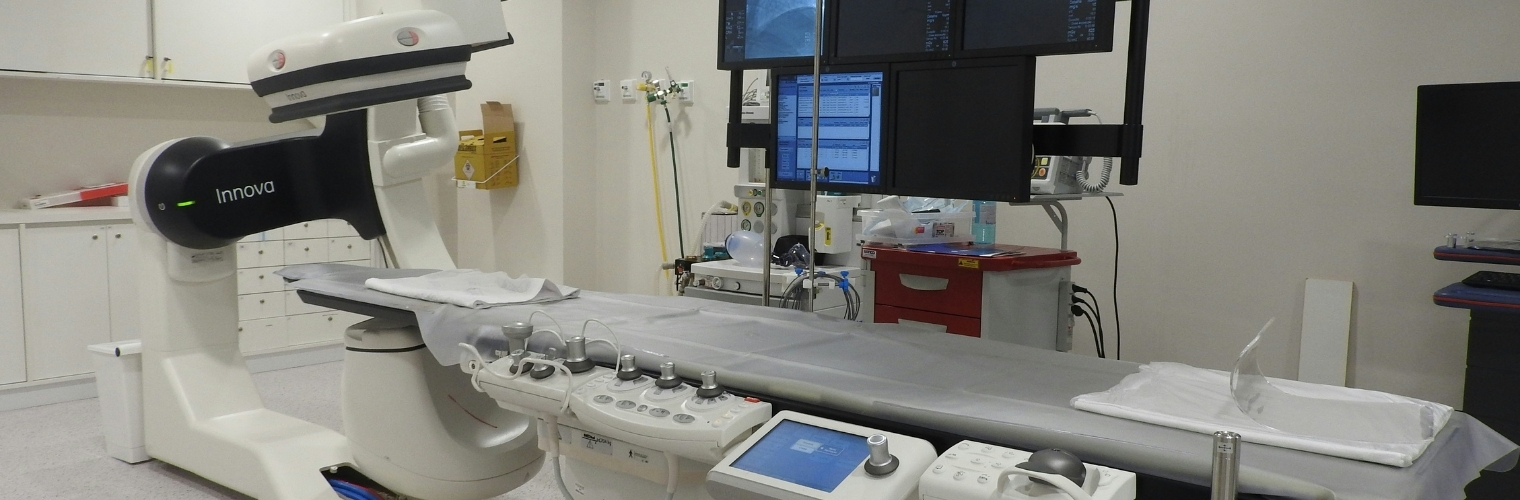
Image Courtesy: Unsplash


Medical imaging is entering a multimodal phase, connecting visual findings with reports, longitudinal records, and clinical signals. Recent advances in vision-language and foundation models are pushing imaging AI beyond isolated detection toward systems that can interpret evidence across modalities and support reporting, retrieval, and clinical decision workflows.
The engineering challenge is substantial: imaging data must remain temporally aligned, relevant clinical context must be retrieved accurately, and model-generated conclusions must remain traceable to their source evidence. Healthcare organizations evaluating this technology therefore need an architecture that expands clinical context without compromising workflow integrity, interoperability, or human oversight.
Also read: Can Wearable Medical Devices Predict Health Events Before Symptoms Appear?
Expand Medical Imaging Technology Beyond Image-Only Analysis
Traditional imaging AI generally receives an image and returns a bounded output such as a classification, segmentation, measurement, or triage flag.
Multimodal systems can ingest several evidence streams together. A chest CT, prior report, smoking history, laboratory result, and previous imaging study can contribute different signals to the same clinical task.
Value therefore shifts from detecting a finding toward contextual reasoning. Model architecture must determine which inputs matter, how they are aligned, and how conflicting evidence is handled.
When Prior Findings Change The Meaning Of Current Images
Medical records are chronological systems. Imaging acquired today may need to be interpreted against findings from three months ago, a surgical history from five years ago, or a laboratory result from yesterday.
Temporal metadata should remain attached to every input. Retrieval systems also need controls around stale reports, duplicated records, amended findings, and examinations performed at different institutions.
Strong pipelines distinguish current evidence from historical context before inference begins.
Convert Narrative Findings Into Structured Inputs
Free-text radiology reports contain clinical signals that are difficult to exploit through simple keyword matching. Structured extraction can identify findings, anatomical locations, measurements, uncertainty, comparisons, and follow-up recommendations.
Useful multimodal pipelines can preserve:
- Image features: lesions, anatomy, morphology, and quantitative measurements
- Report semantics: findings, impressions, comparisons, and recommendations
- Clinical signals: symptoms, history, laboratory data, and medications
- Longitudinal context: prior studies, disease progression, and treatment history
Joining these layers can support richer retrieval and more targeted reasoning.
How to Build Traceability Into Multimodal Model Architecture
Multimodal capability creates another engineering requirement: evidence attribution.
Clinicians need to distinguish information derived from the current image, retrieved records, prior reports, or model inference. Retrieval-augmented architectures can help expose source material, while structured intermediate representations can preserve the relationship between observations and conclusions.
Opaque fusion creates difficult validation problems when a model reaches the right conclusion for the wrong reason.
Put Multimodal AI Inside The Clinical Workflow
Clinical value depends on where inference occurs.
Embedding multimodal AI inside PACS, reporting systems, or clinical worklists can reduce context switching and expose relevant evidence during interpretation. Separate tools can introduce additional authentication, data movement, and review steps that undermine operational value.
Successful deployment therefore requires alignment across DICOM imaging, clinical data interfaces, identity systems, storage, inference services, and reporting workflows.
Stress-Test Retrieval, Reasoning And Clinical Output
Accuracy on isolated image datasets tells only part of the story. Multimodal systems require evaluation across combinations of image quality, acquisition protocols, patient populations, missing context, conflicting records, and uncommon findings.
Performance testing should examine both the model and the surrounding retrieval pipeline. Hallucinated clinical context, incorrect temporal associations, omitted findings, and unsupported recommendations can become workflow risks even when image recognition remains accurate.
Frequently Asked Questions
Can Multimodal AI Improve Radiology Reporting?
Multimodal systems can combine imaging findings with prior reports and clinical context to support richer draft reports and interpretation workflows. Human review remains essential for clinically consequential output.
Does Multimodal AI Replace PACS Infrastructure?
Multimodal AI adds an intelligence layer rather than eliminating core imaging infrastructure. PACS, DICOM services, clinical data interfaces, identity controls, storage, and audit systems remain important components of the deployment architecture.





