
Medical Devices and Technology
Designing a Medical Imaging Technology Architecture for AI-Ready Healthcare
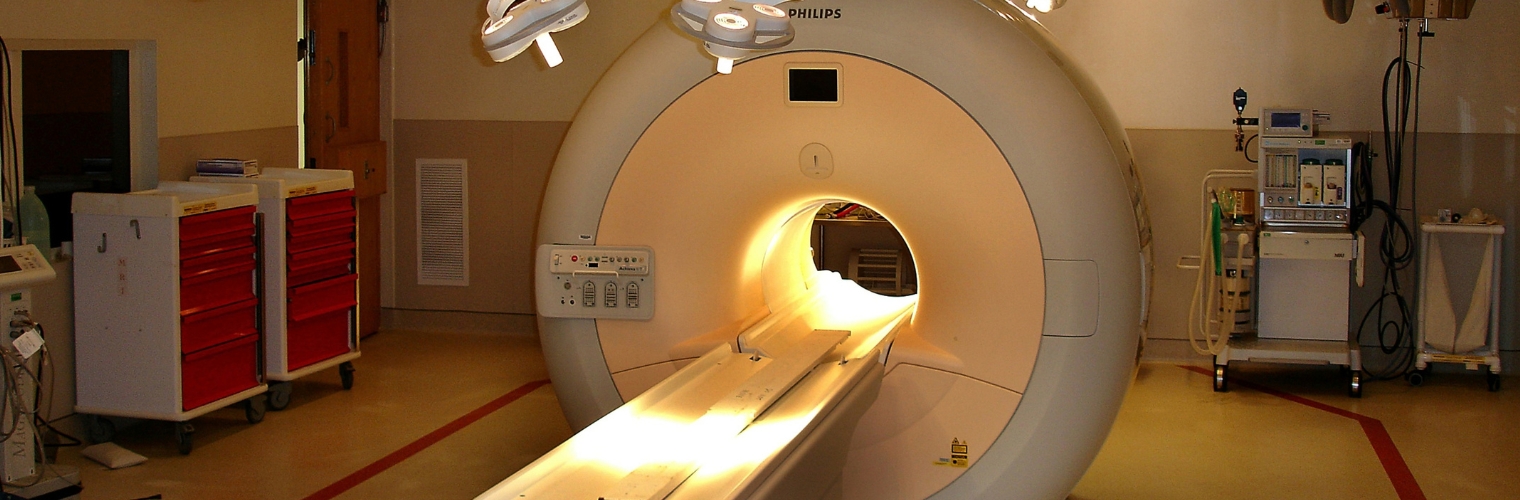
Image Courtesy: Unsplash


Medical imaging is no longer limited to capturing, storing, and viewing scans. AI is transforming imaging into a data-intensive clinical environment where images can support detection, prediction, segmentation, workflow prioritisation, and clinical decision support.
Yet adding an AI model to an existing imaging environment is rarely enough. A modern medical imaging technology architecture needs to connect imaging devices, clinical data, storage, computing, AI models, and healthcare applications within a secure and scalable framework.
Also read: When Wearable Medical Devices Become Part of the Hospital Data Stack
What Does An AI-Ready Medical Imaging Architecture Need?
AI-ready imaging starts with a data foundation capable of connecting imaging information with broader clinical context. Medical images, metadata, patient information, and clinical records need to move between systems without creating isolated data silos.
DICOM remains central to medical imaging interoperability, while DICOMweb enables web-based access to imaging resources. FHIR can connect imaging information with broader healthcare workflows and clinical applications.
A robust architecture should support:
- Standardised imaging data and metadata
- Integration with PACS, VNA, and EHR systems
- Secure access to historical and real-time studies
- Data normalisation across imaging modalities and facilities
- Reliable pipelines for AI development and deployment
Building this foundation allows AI applications to work with consistent, accessible data rather than disconnected imaging repositories.
Build A Scalable Compute And Storage Layer
Medical imaging AI can require substantial computational resources, particularly for 3D reconstruction, segmentation, multimodal analysis, and foundation models.
Cloud infrastructure can provide elastic compute and storage for AI development, training, and large-scale analysis. Edge and on-premises infrastructure can complement cloud environments where low latency, connectivity, data residency, or clinical workflow requirements favour local processing.
Hybrid architectures can therefore distribute workloads according to their technical and clinical requirements. Large-scale model training may use cloud resources, while time-sensitive inference can occur closer to imaging equipment or clinical systems.
How Should AI Integrate With Medical Imaging Workflows?
AI delivers limited clinical value if clinicians must leave established workflows to access its output.
AI capabilities should connect with imaging systems and clinical applications through appropriate interfaces and APIs. Results can be returned as structured findings, annotations, measurements, risk scores, or prioritisation signals within familiar clinical environments.
Architecture should also support AI orchestration. Multiple models may need to process the same study based on modality, clinical indication, specialty, or urgency.
Such integration turns AI from a standalone application into a functional component of the medical imaging workflow.
Secure The Imaging And AI Data Pipeline
AI-ready healthcare requires strong protection for sensitive imaging and patient information throughout its lifecycle.
Security controls should cover data ingestion, storage, model access, APIs, user authentication, and communication between systems. Encryption, role-based access, audit trails, and network segmentation can help protect data and control access.
Governance also matters. Production AI models require version control, validation, monitoring, and defined processes for model updates. The architecture should make it possible to identify which model generated a result and under which version or configuration.
Design For Continuous AI Operations
Medical imaging AI should not be treated as a deploy-once technology.
New imaging protocols, datasets, clinical requirements, and model versions can change system behaviour over time. An AI-ready architecture therefore needs mechanisms for monitoring performance, identifying data drift, evaluating new models, and managing controlled deployments.
MLOps capabilities can connect development and production environments while supporting reproducibility, model monitoring, and governance.
Why Is Interoperability Critical For Medical Imaging AI?
Interoperability determines how effectively imaging AI can access data and return useful results to clinical systems.
Without appropriate standards and integration layers, organisations can end up with AI tools that operate independently of PACS, EHRs, and other healthcare applications. This can increase workflow complexity and limit the value of otherwise capable models.
An interoperable architecture creates pathways between imaging systems, clinical applications, AI services, and downstream workflows while preserving appropriate security and governance controls.
Build The Foundation Before Scaling AI
Successful medical imaging AI depends on more than model accuracy. It requires an architecture capable of moving high-quality imaging data securely through acquisition, storage, processing, inference, clinical presentation, and ongoing monitoring.
A thoughtfully designed medical imaging technology architecture provides that foundation. It enables healthcare organisations to introduce AI while maintaining interoperability, scalability, security, and clinical workflow continuity.
The objective is not simply to make imaging systems AI-enabled. It is to create an adaptable imaging ecosystem that can support new AI models, clinical applications, data sources, and computing approaches as healthcare requirements evolve.





