
Medical Devices and Technology
Can Medical Imaging Technology Predict Disease Before Symptoms Appear?
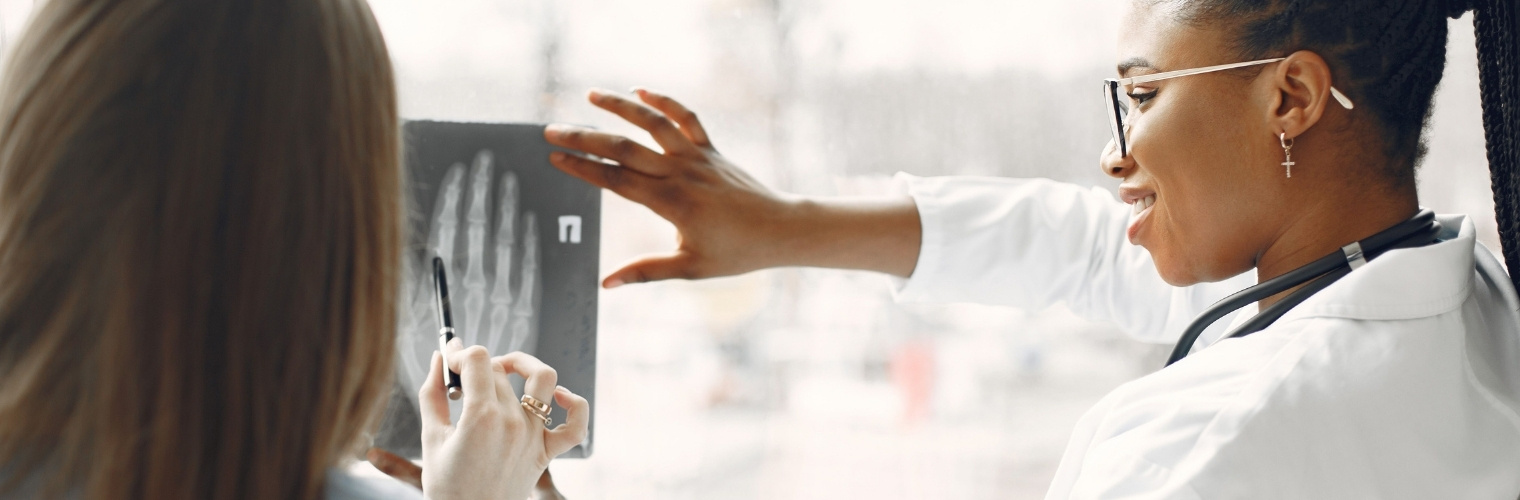
Image Courtesy: Pexels


Medicine has traditionally used imaging to answer a question: What is wrong with this patient now?
A CT scan finds a suspicious nodule. An MRI reveals tissue damage. A mammogram identifies an abnormality that requires investigation. The image helps clinicians see disease that already exists.
But medical imaging technology is beginning to pose a more ambitious question: What could happen to this patient next?
Advances in artificial intelligence, quantitative imaging, and pattern recognition are making it possible to extract information from scans that the human eye may not readily detect. The implications could push imaging beyond diagnosis and toward something far more consequential—prediction.
Medical Imaging Technology Is Learning to See Risk
A medical image contains more information than its most obvious abnormality.
Subtle variations in tissue, organ structure, calcification, bone density, fat distribution, and vascular characteristics can carry clues about health risks. AI gives researchers the ability to analyze these patterns at a scale and level of consistency that would be difficult to achieve manually.
The result is a shift from simply seeing disease to potentially measuring vulnerability.
One Scan Could Answer Questions It Was Never Asked
Consider a patient receiving a CT scan for an unrelated clinical reason. Traditionally, the scan would primarily answer the question that prompted it. Increasingly, algorithms can analyze existing images for additional indicators of risk.
A 2026 study involving 27,990 adults without known cardiovascular disease found that deep-learning analysis of routine head CT scans could provide information that complemented traditional cardiovascular risk factors. The researchers reported that the approach could identify signs of subclinical disease without requiring additional imaging, radiation, or cost.
This idea—often called opportunistic screening—could fundamentally change the economics of medical imaging technology.
Instead of asking patients to undergo a new test for every potential risk, healthcare systems could potentially extract more preventive value from scans that already exist.
AI Is Turning Images Into Data
The human eye is extraordinarily capable, but it was never designed to quantify thousands of subtle relationships simultaneously. AI changes that.
Algorithms can measure structures, compare patterns across large datasets, and detect associations between imaging characteristics and future outcomes. This does not mean AI can look at any scan and confidently predict whether someone will develop cancer, dementia, or cardiovascular disease. It means imaging is becoming a richer source of risk information.
The transition is already visible in clinical technology. As of September 2026, the U.S. Food and Drug Administration reported that it had authorized more than 1,600 AI-enabled medical devices, spanning applications including radiology, cardiovascular care, neurology, and other specialties.
Yet greater predictive power creates a problem medicine cannot solve with algorithms alone.
Earlier Detection Is Valuable Only When We Know What Comes Next
Finding disease earlier sounds unquestionably beneficial. But earlier knowledge does not automatically produce better healthcare.
What happens when medical imaging technology identifies elevated risk years before symptoms appear?
Prediction Can Create a New Kind of Patient
Someone can feel perfectly healthy yet suddenly receive an algorithmic risk score suggesting an elevated probability of future disease.
Should treatment begin?
Should clinicians order more tests?
How often should the patient return for imaging?
And what happens when the prediction is wrong?
False positives can trigger anxiety, unnecessary procedures, additional radiation exposure, and higher costs. False negatives can create misplaced reassurance. Algorithms trained on populations that do not adequately represent the patient being examined can introduce another layer of uncertainty.
The challenge therefore shifts from detecting more information to determining which information deserves action.
The Radiologist’s Role Could Expand
Predictive imaging may also reshape radiology itself.
Radiologists have traditionally interpreted images to identify abnormalities and support diagnosis. In a predictive model of care, they could increasingly help translate imaging biomarkers into longitudinal risk.
That requires collaboration among radiologists, clinicians, data scientists, and patients. The technology may generate the signal. Medicine still has to decide what the signal means.
ALSO READ: How Wearable Medical Devices Are Creating a New Generation of Digital Biomarkers
Medical Imaging Technology Is Moving From Diagnosis to Foresight
So, can imaging predict disease before symptoms appear?
In certain settings, it can already identify subclinical abnormalities and patterns associated with future risk. But predicting risk is not the same as predicting destiny.
The real breakthrough will come when medical imaging technology can combine earlier detection with clinically validated interventions, responsible AI, representative datasets, and clear pathways for what happens after a risk is identified.
The future of imaging may not simply be seeing disease sooner. It may be learning when seeing sooner actually helps.





